Systems and Tools
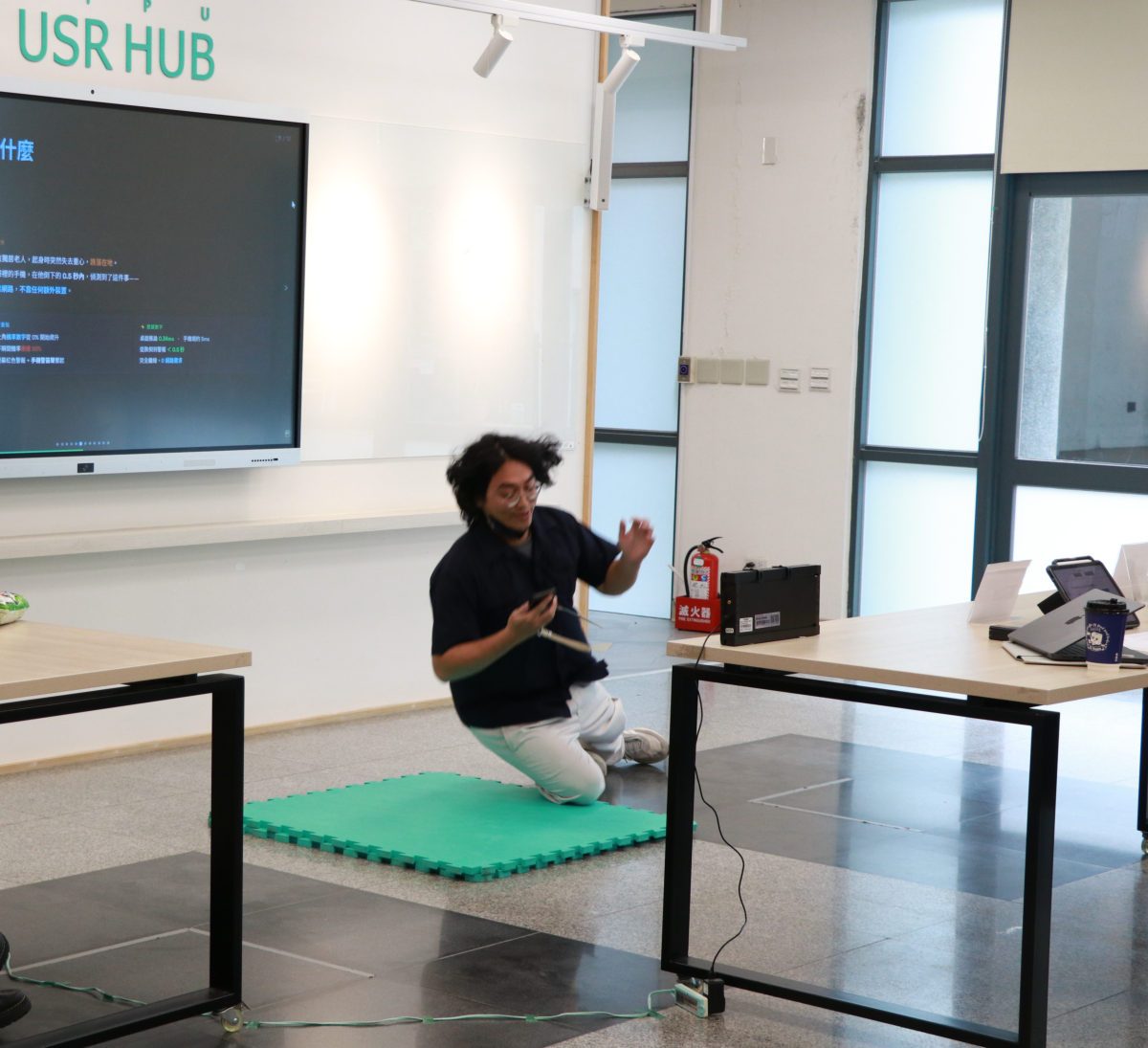
FallGuard: On-Phone Fall Detection
Hong-Guang Chen (model and app)
Apr – Jun 2026 · Merit Award entry, NTPU AI competition A Official record
Unrolls ISTA into 5 layers embedded in a 1D-CNN. The phone runs the LISTA version, a 274 KB model executed offline on Android with ONNX Runtime, so data never leaves the phone.
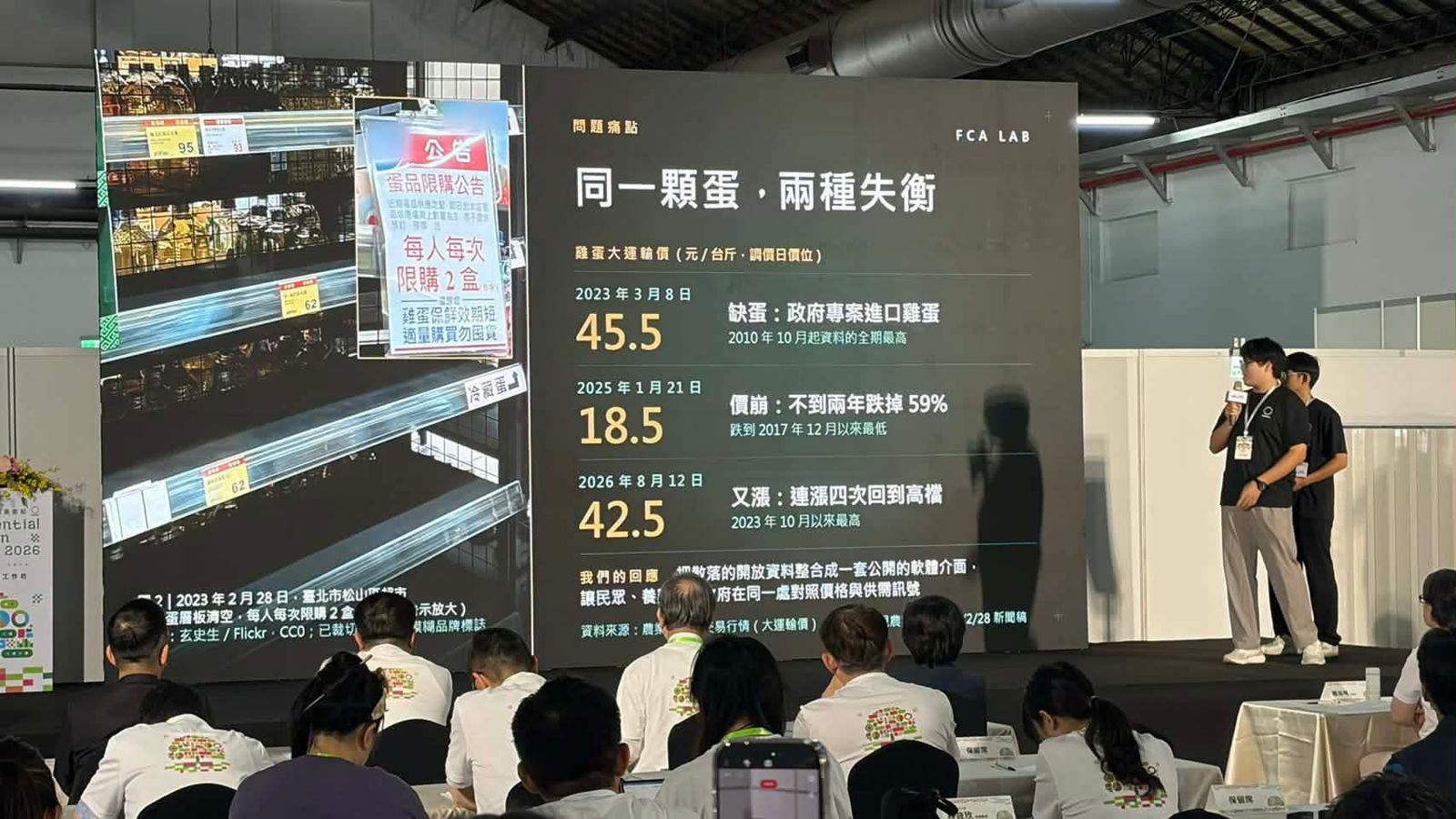
雞蛋通: Egg-Supply Early Warning
FCA LAB team leader (9-member team)
Oct – Nov 2026 · Presidential Hackathon finals entry A Official record
A cloud analyst console plus a Flutter demo app. All candidate models were pre-registered and the scoring rules fixed in advance; the holdout period (Jun 7 – Sep 27) was unlocked only once. The holdout contained no price-drop events, so the main candidate could not be told apart from a flat forecast, and this result was reported as-is in the finals presentation.
- AR
SportHUD: Sports HUD Platform for AR Glasses
Hong-Guang Chen
Since Nov 2026 · In development In progress
Four modules: motion coaching, live translated captions, AI Eye, and match statistics. Faces are blurred on the device before any image is uploaded.
ICLAB Automation, Lab by Lab
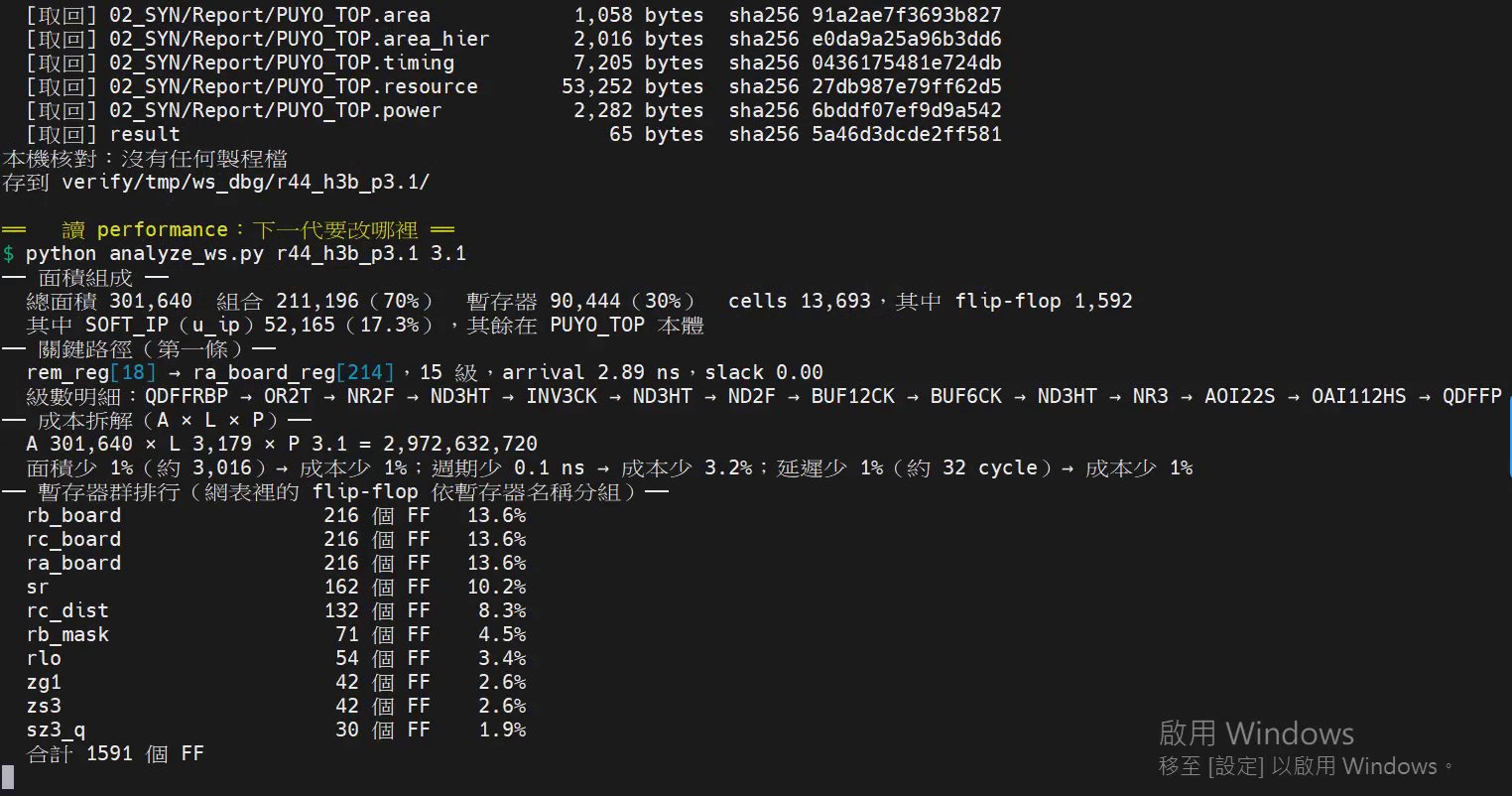
In the IC design lab course, every lab is ranked across the class by a cost built from area A, clock period P and latency L. Over six labs, the whole loop of synthesizing on the workstation, measuring, retrieving, interpreting and submitting was automated and packaged so it carries over to the next lab. B Own record
Result: at 3.1 ns, area 301,640.07, latency 3,179, cost 2,972,632,719.5, slack 0, bit-identical to the version auto-submitted on Oct 26 at 08:50 (same RTL SHA256, da8f70a7…); at 3.2 ns, cost 2,973,223,777.6. On the first attempt, packaging was blocked by the package’s own hash check because the workstation-side scripts had changed on Oct 31; it went through only after the tool tests were rerun (193 s). This is also recorded at the start of the video.
Auto-Submission
- Four conditions before submitting: cost at least 0.5% lower than the submitted version, all pre-submission checks passed, more than 3 hours before the deadline, and auto-submission not switched off. If any step fails, it switches itself off and sends a notification.
- Staging isolation: the TA’s 00_tar / 01_submit / 02_check run in a separate directory, so the lab directory is never touched; submission is refused if syn.tcl differs from the one used for measurement.
- Receipt check: the file the system received is downloaded and its SHA256 recomputed locally, along with file names, banned words and file-split results.
- Deadline safety: after the deadline the gate refuses every submission; a final trigger fires 10 minutes before the deadline and runs the check before submitting.
Never Downloading Process Files (a Course-Removal Offense)
Boundary: process files (.db, .lib, .sdb, .synopsys_dc.setup, cell library models, CBDK) never leave the workstation; my own netlist, SDF and full reports may be downloaded for analysis (see “Netlist analysis” below).
- The automated loop returns numbers only: the automation channel passes back only summaries, json, csv and md, each under 2 MB with a matching hash, and rejects any path escape; the local side checks again on receipt. This channel carries no netlist, keeping the unattended loop minimal.
- The gate gives no shell: the automation key is bound to a forced command that accepts only 6 actions, with no pty and no forwarding.
- Exclusions when pulling files: when the TA kit is pulled from the workstation, an exclusion list blocks .db, .lib, .sdb, .synopsys_dc.setup, cell libraries and CBDK, and every file is checked after the pull.
- Memory returns hashes only: for the memory macros’ .lib/.db, only file name, size and SHA256 come back, never the contents.
Automatic Optimization
- Three-stage period grid: a coarse sweep every 5 ns, a medium sweep every 1 ns and a fine sweep every 0.1 ns, at most 36 DC points per version. During convergence only the planned points are measured, and tighter points are skipped once a looser one fails timing.
- Netlist analysis: the full-access key brings my own netlist, SDF and full timing/area reports back to my machine to analyze the critical path, per-module area and the diff between versions before deciding how to change the next RTL (from Lab06 on).
- Parallel versions: up to 8 RTL versions and 180 DC points per round, with cost, retrieval and ranking computed automatically.
- Stopping rules: stop after 3 consecutive rounds that improve less than 1%, or when weekly usage reaches its threshold; after 3 rounds with no new architecture winning, the decision goes back to a human.
- Watchdog: renews the lease while DC runs, then imports the results and runs the submission checks when it finishes, so no one has to keep watch.
Things You Might Not Expect
- Three keys, separated privileges: loop, submit and full access are kept apart. The AI never types passwords, never generates keys on my behalf and never edits the gate, and the deployment package ships with SHA256SUMS.
- 23-question setup questionnaire: once it is answered, a generator builds the new lab project; switching labs, accounts or schools only changes the config file.
- Self-tests: 10 smoke tests; a reverse check removes each of the 22 safeguard rules one at a time to confirm the tests fail; the file-split rule, implemented in both awk and Python, matches bit for bit across 42 cases.
- Prompt-injection defense: assignment PDFs and web pages are treated as data only (the Lab01 PDF once hid a prompt injection, and Lab06 had a HackMD page disguised as a system message).
Rankings and What Each Version Changed
| Lab | Assignment | Cost formula | Rank | Weakest factor | What this version of the automation changed |
|---|---|---|---|---|---|
| Lab01 | OISS | A·P | 8/115 | Period P | Manual login via MobaXterm, SFTP drag-and-drop; first-generation sweep.sh |
| Lab02 | LDPC | A²·L·P | 19/120 | Period P | Fixed scripts on the workstation, non-overwritable tag directories, two parallel lanes, SHA ledger |
| Lab03 | Zuma | A·L·P | Lower tier | Latency L | One folder per round, one-line launch, numbers only on return; sweep.sh generalized |
| Lab04 | F_ATTN | A²·L·P | Lower tier | Latency L | First dedicated key with a forced-command gate |
| Lab05 | JPEGLENC | A²·ΣL·P | 75/101 | Area A | Config-driven toolkit, dual gates, staged submission with receipt SHA check, auto-submission (14 of 15 submissions automatic) |
| Lab06 | Puyo Puyo | A·ΣL·P | Pending | — | Three keys with separated privileges, watchdog, final trigger before the deadline; done continuously in one chat session |
Takeaway: the tooling solved iteration speed, but the rank follows the weakest factor (Lab03’s 2.08 ns period was the shortest in the class, yet the overall rank stayed in the lower tier). The rule since then: on getting the cost formula, first estimate where each factor stands in the class, and start with the weakest one.
Proposals
- MOA
Three Collaboration Proposals for the Ministry of Agriculture: Egg-Supply Early Warning, a Department of Statistics Version, and Agricultural Supply Early Warning
Lead writer and project contact
Completed Oct 28, 2026 · No record yet of sending or reply B Own record